Packing Services in San Angelo, TX
San Angelo Movers packs up homes and businesses around the San Angelo area, whether that's the whole place or just the rooms you can't face. Ask any packing provider which cartons, paper and specialty boxes they bring and how they label; the standard is to mark each carton with the room it's headed for. Unpacking at the new address is worth asking about too. Tell us the rooms and your moving date.
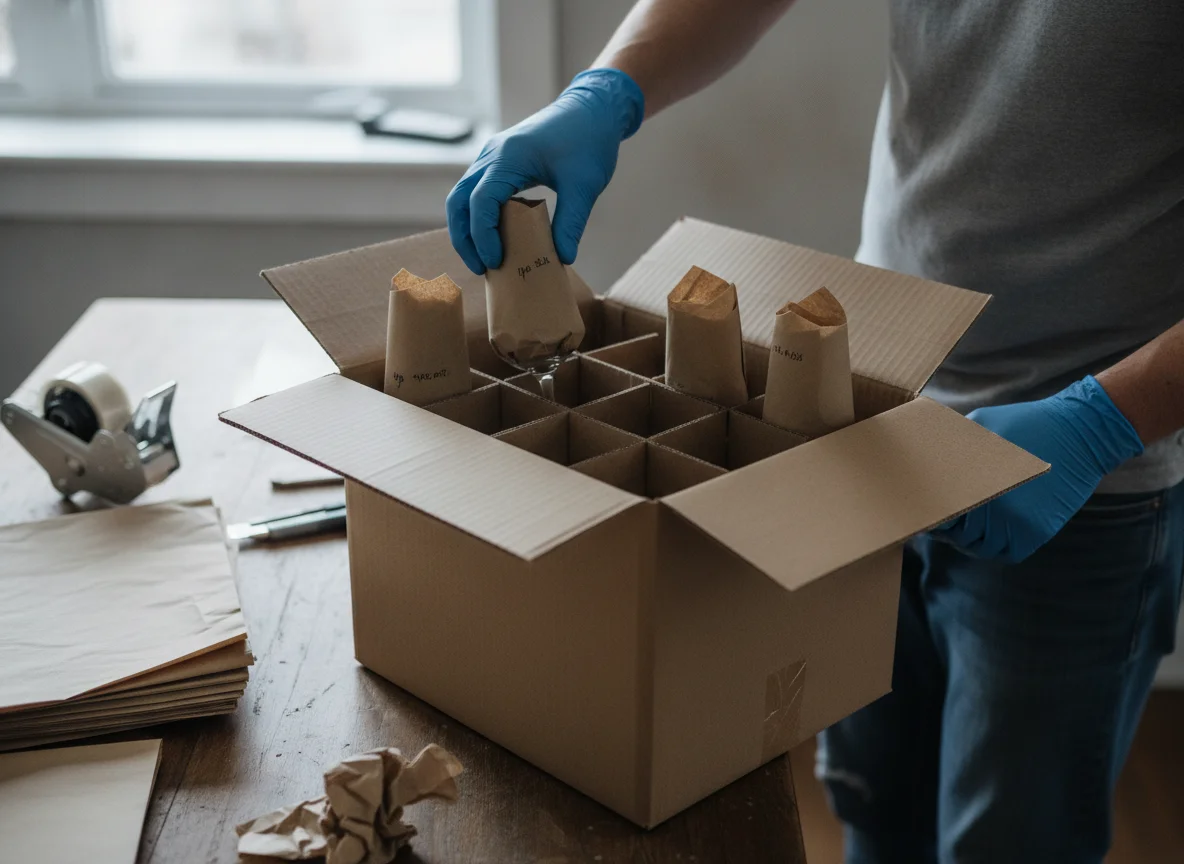
You decide how much to hand over
Most people treat this as all or nothing, and that's the usual mistake. Packing help comes in four forms, and combining them is common:
The whole house.
Each room, cabinet and drawer. Set aside what you'll need for the final night and the first morning, and everything else gets packed up.
Some rooms only.
Just the rooms you'd rather skip. Most often that's the kitchen, followed by the garage, the china cabinet and the home office. The rest you tackle on your own schedule.
Fragile only.
Glassware, china, crystal, mirrors, framed art, TVs, instruments and collections get careful packing, while you take care of clothing, books and linens, the easy part in any case.
Unpacking.
The half hardly anyone books and nearly everyone wishes they had. There's more below.
Doing it all yourself? Ask about buying materials on their own. Using the right carton for each job is most of the work, and it's where homemade packing usually falls short.
Packing comes before moving day
Good to know before you plan the week: a full pack is done ahead of the move, normally the day before, and over two or three days for a big house. The truck then shows up to a home that's already in boxes. What happens on the day itself is explained on the local moving and residential moving pages.
Your final days change shape as a result. Beds, the coffee maker, shower things and the pets' gear are boxed last or on the morning itself. Whatever you're still using stays out and goes into its own carton at the very end. And sorting must be finished ahead of the packers, not alongside them: packers box up whatever they find, including a drawer of dead batteries and a closet of clothes you'd already meant to give away.
What careful packing really involves
Most broken things in boxes come from technique, not misfortune. Here's how a well-packed carton differs:
Dishes go in upright, the way books sit on a shelf
Not laid flat. In a flat stack, the full weight bears down on the center of the lowest plate, and that's exactly where it breaks.
Plain packing paper, never newsprint.
Newspaper ink rubs off onto china, glassware and painted surfaces, and it takes weeks of washing to remove.
Each box packed full, with no empty space left inside.
A carton with room to spare caves in once something is set on top; a full one holds the load. Tip a finished box and nothing in it should shift.
Heavy items go in small boxes, light items in large ones.
Fill a big carton with books and the bottom seam gives way, usually halfway down a flight of stairs in somebody's arms.
Bottom seams taped over the join and up each side
Rather than one strip and crossed fingers.
Wine glasses upright in divided cells
A single glass in each cell, so none of them touch.
Lampshades packed alone
Nested together, never boxed with the base or with anything that could press in. Crushed shades top the list of preventable damage in household moves.
Mirrors, art and glass tabletops in telescoping boxes
Moved and loaded standing on edge.
Each carton labeled with its destination room, an arrow for up, and a rough note of contents
And nothing taped shut until it's been recorded.
What stays out of boxes
Anything that burns, is pressurized, or corrodes.
Gas and propane, solvents, aerosols, pool and lawn chemicals, ammunition, fireworks. A closed truck in late June, when NWS normals put the high at 96 degrees, is no place for them; use, dispose of or carry them yourself first.
Perishable and opened food
So the fridge and pantry get cleared out, not packed into boxes.
Papers, medicine, jewelry, keys, laptops, hard drives and anything you can't replace
Keep these with you; a careful packer leaves them untouched instead of deciding what to do with them.
Plants and pets
Neither one belongs in a box, and each needs its own plan, most often your own vehicle or a specialist who transports them for a living.
Items you would rather handle yourself.
Mention them, gather them in one room, and keep it closed.
Unpacking, the part most people skip
Paying for the pack and passing on the unpack is the classic false saving of a move. Packing happens against a deadline; unpacking drags on for months, fitted around work, with boxes lining the hallway the entire time.
An unpack empties cartons room by room, setting things on counters or straight into the cabinets you choose, and, most valuable of all, clears away the packing debris. A whole house produces a startling pile of cardboard and paper, and in San Angelo bubble wrap isn't accepted in the green recycling bin, so ask any provider whether removal is included.
It scales just like packing: the entire home, or only enough to get the kitchen and bedrooms working on the first night.
Sort first, then pack
Soon someone will wrap, box, carry and then unwrap every single item you own, including the ones you'd already planned to get rid of anyway. Deciding what stays behind is the most valuable afternoon of the whole move, and on a long-distance move, where weight drives everything, it pays off even more. It only works when it's done ahead of time: once a carton is taped shut and stacked, nobody is going to reopen it to think again.
What sets the cost
The number of rooms, the share that's fragile, the specialty supplies needed (dish packs, wardrobe boxes, mirror cartons, made-to-measure crates for art or stone), whether unpacking is part of it, and how much sorting is left when the packers arrive.
One more factor has nothing to do with cost. Who packed and sealed a carton can change who is responsible if what's inside arrives broken, and the gap is wider than people think. Ask how it works before you split the rooms, and get it into the written proposal a Texas mover must give you before loading, a rule from the Texas Department of Motor Vehicles.
We work across the San Angelo area and on to Alvery Junction, Bentwood, Miles, Mertzon, Paint Rock, Robert Lee and the towns nearby.
Common questions
Who supplies the boxes and packing materials?
Ask before you book. Most packing services bring cartons, plain paper, tape and specialty boxes, but what's included differs from one provider to the next, and a quick question now beats an assumption on packing day.
Can I do some rooms myself and leave the rest?
That's the arrangement most people choose. Tell us which rooms you're taking on and which you aren't, and mark yours clearly so nothing is boxed twice or overlooked.
Should I be home during the packing?
Ideally, yes, at least at the start and the finish. Questions always come up, like what stays, what rides in your car, and which closet is off limits, and they take seconds to answer face to face and far longer to fix later.
What do I do with all the cardboard after?
If unpacking was booked, ask whether the packing material leaves with the movers. Unpacking yourself? The City of San Angelo Operations Department takes flattened corrugated cardboard in the green bin, loose rather than bagged, so plan ahead for a house's worth.
Ready to pass on the packing?
Send the rooms you want packed, the number of bedrooms, your moving date, and whether you'd like unpacking at the new place. Moving an office or shop instead of a home? commercial moving explains how the work is usually shared between your staff and the movers.